
To the Moon and Back
TEXTILE AND GLASS JEWELLERY INSPIRED BY THE MOON
Project Description
To the Moon and Back
A collaboration between textile artist Ksenia Semirova and glass artist Naomi Jacques, both members of the Society of Designer Craftsmen. The project was created for Crossing Crafts 2026, a joint initiative between the Society of Designer Craftsmen and Suffolk Craft Society bringing together practitioners from different disciplines.
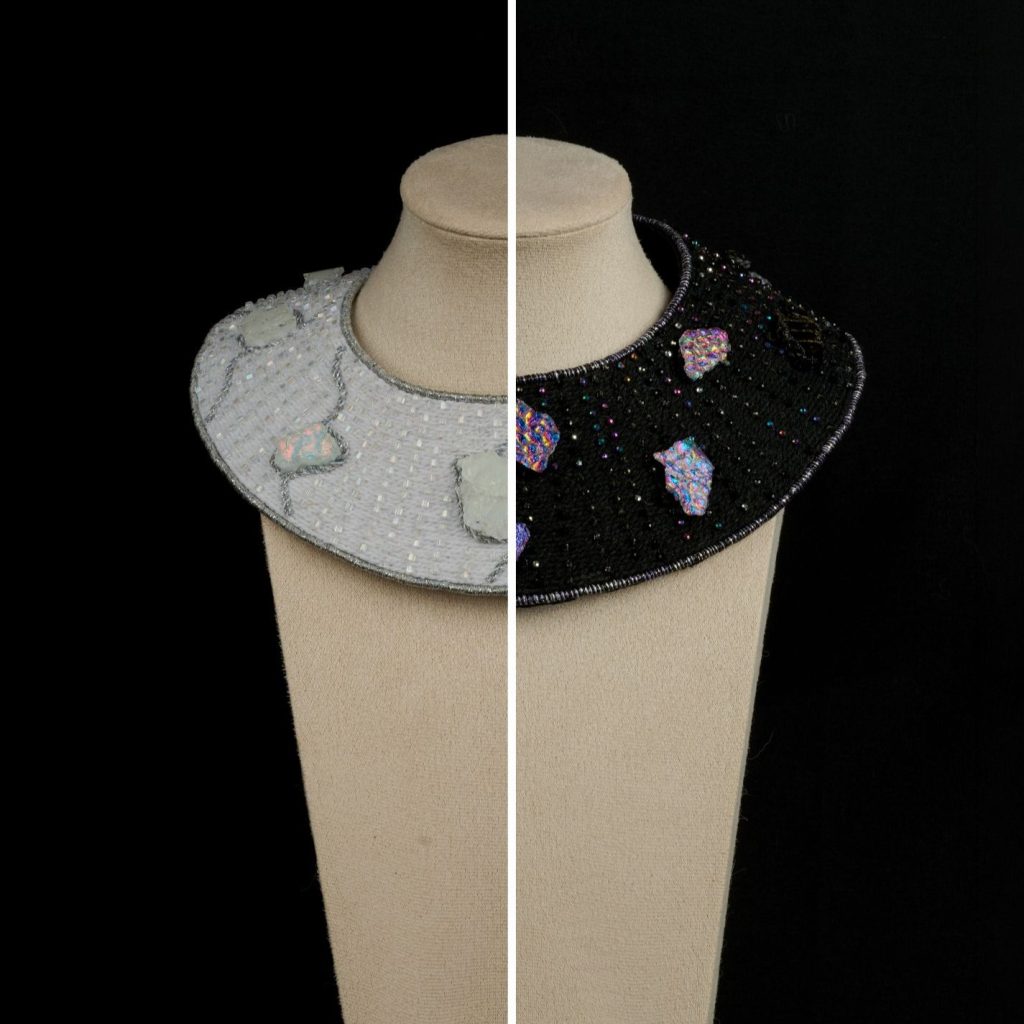
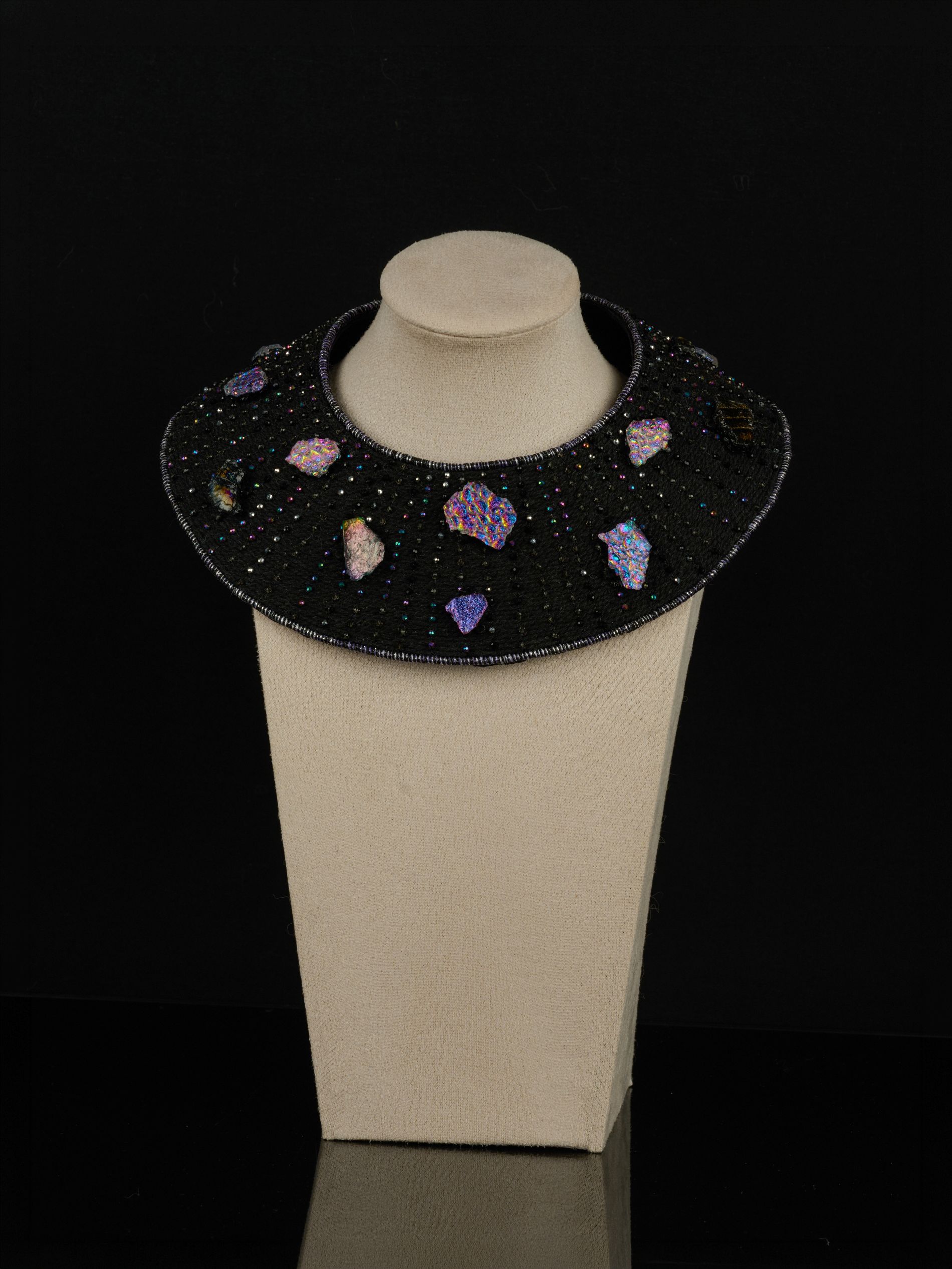
This textile and glass jewellery project was inspired by the Artemis II mission and images of the lunar surface. Two statement necklaces combine pearl setting, handmade glass, beads and decorative cords within a horseshoe-shaped form rooted in traditional jewellery from the Russian North. One is pale and reflective; the other responds to the unexpected colours revealed through contemporary lunar photography.
Something Old, Something New, Something Blue
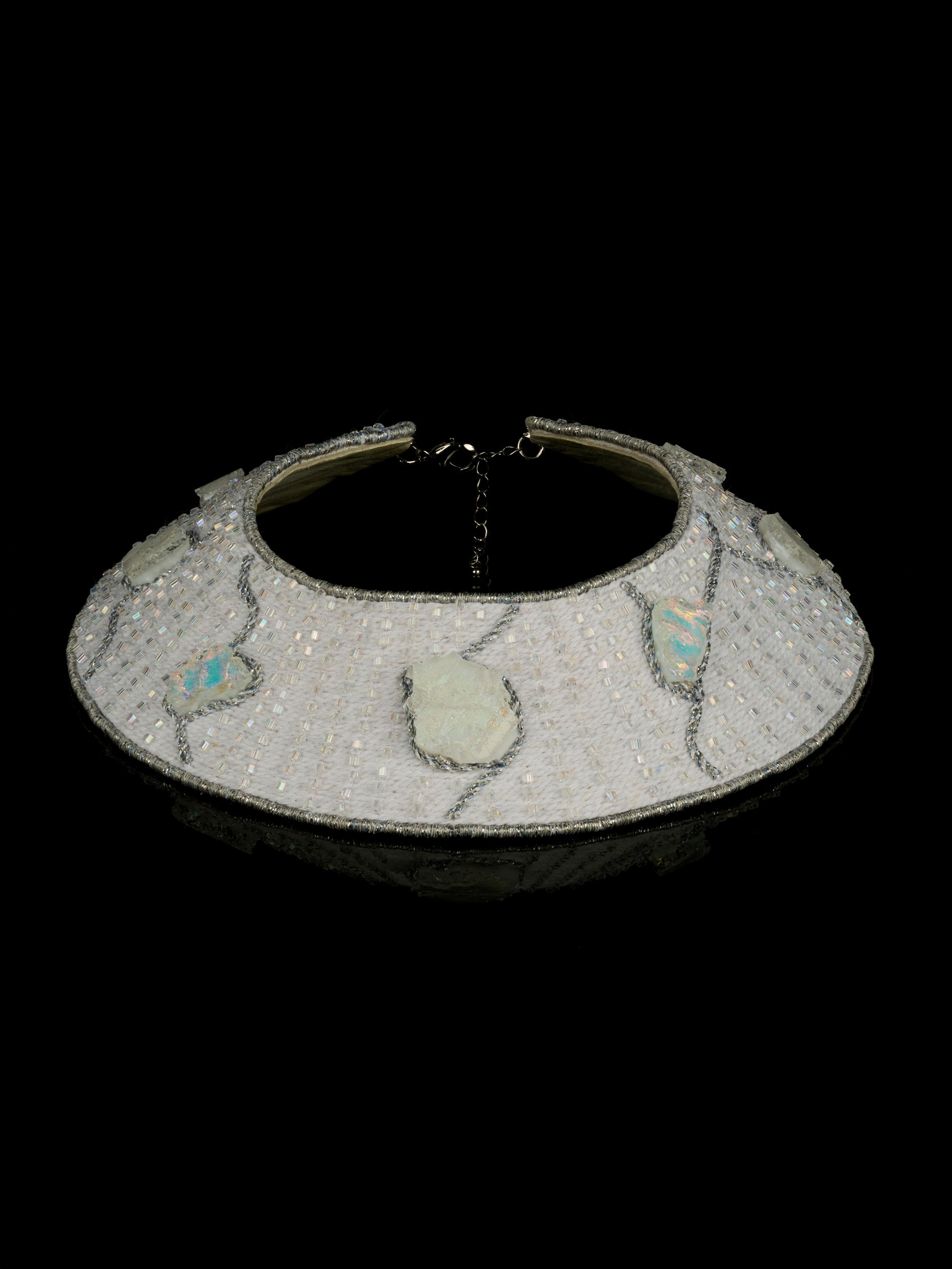
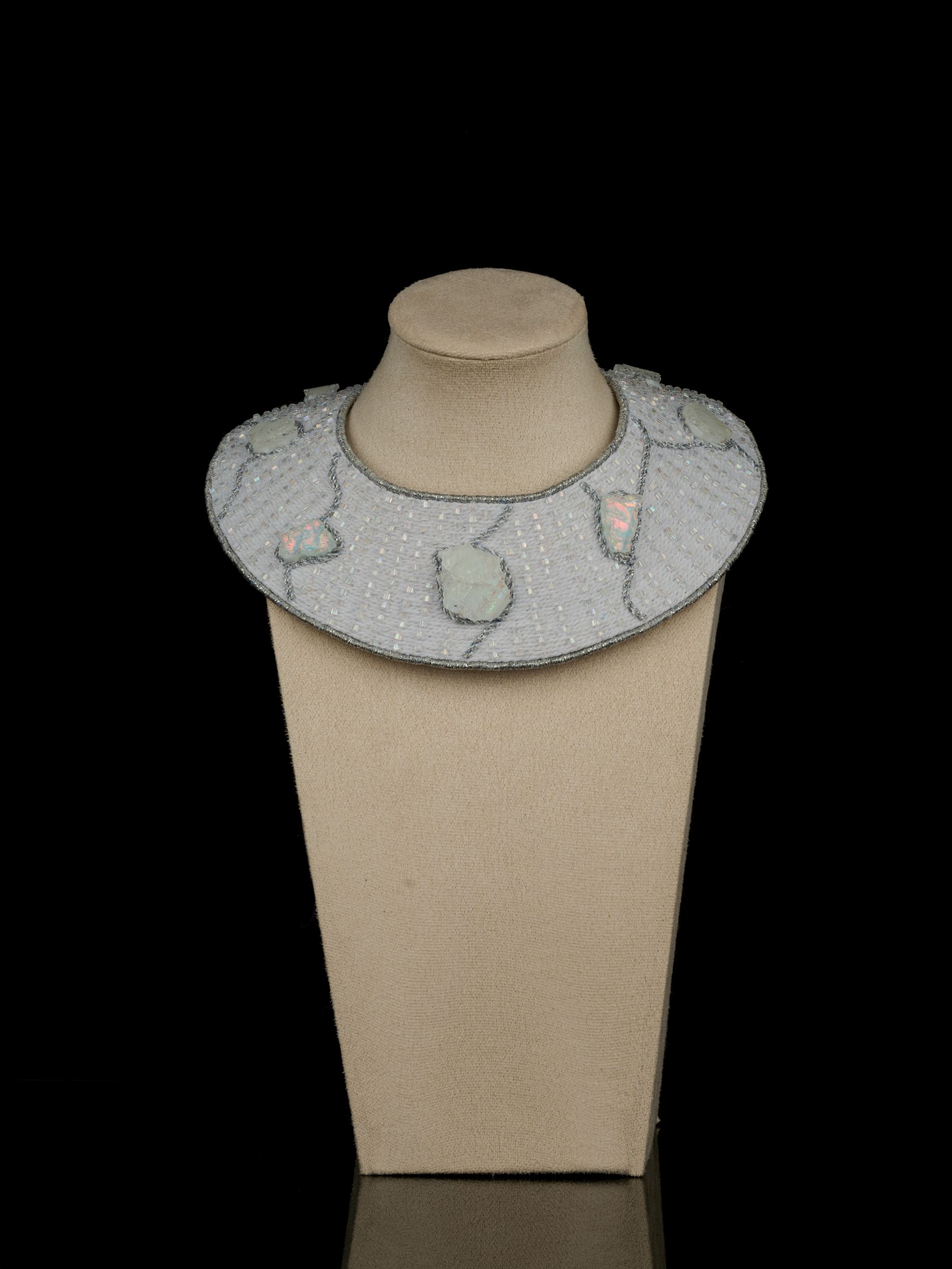
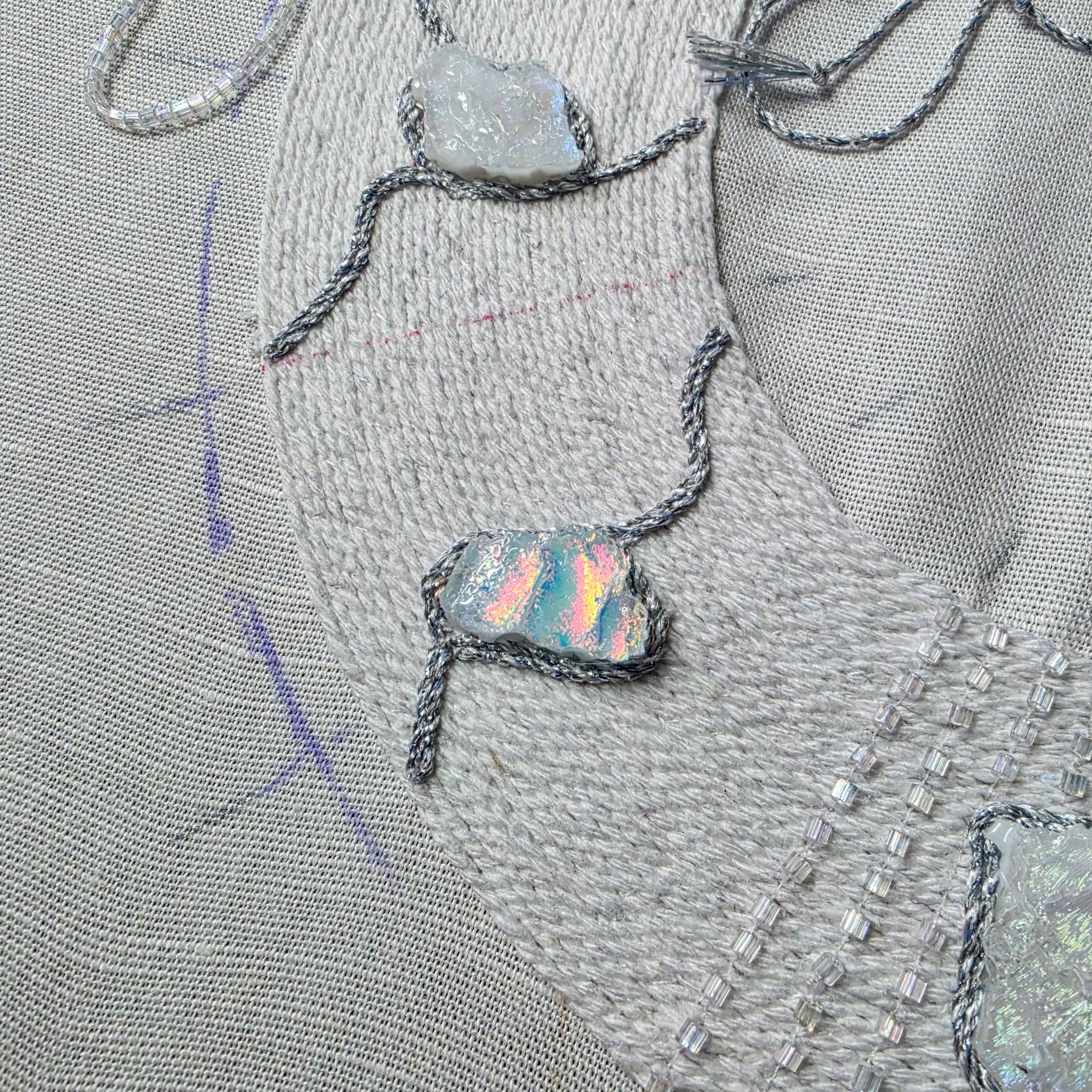
I liked the idea of starting this project almost as an experiment: something old, something new and something blue. The “old” part was my heritage embroidery and the traditional folk-jewellery structure; the “new” was Naomi’s glass and Artemis II as our starting point. The blue turned out to be only a hint in the first, white necklace. Then the project changed completely.
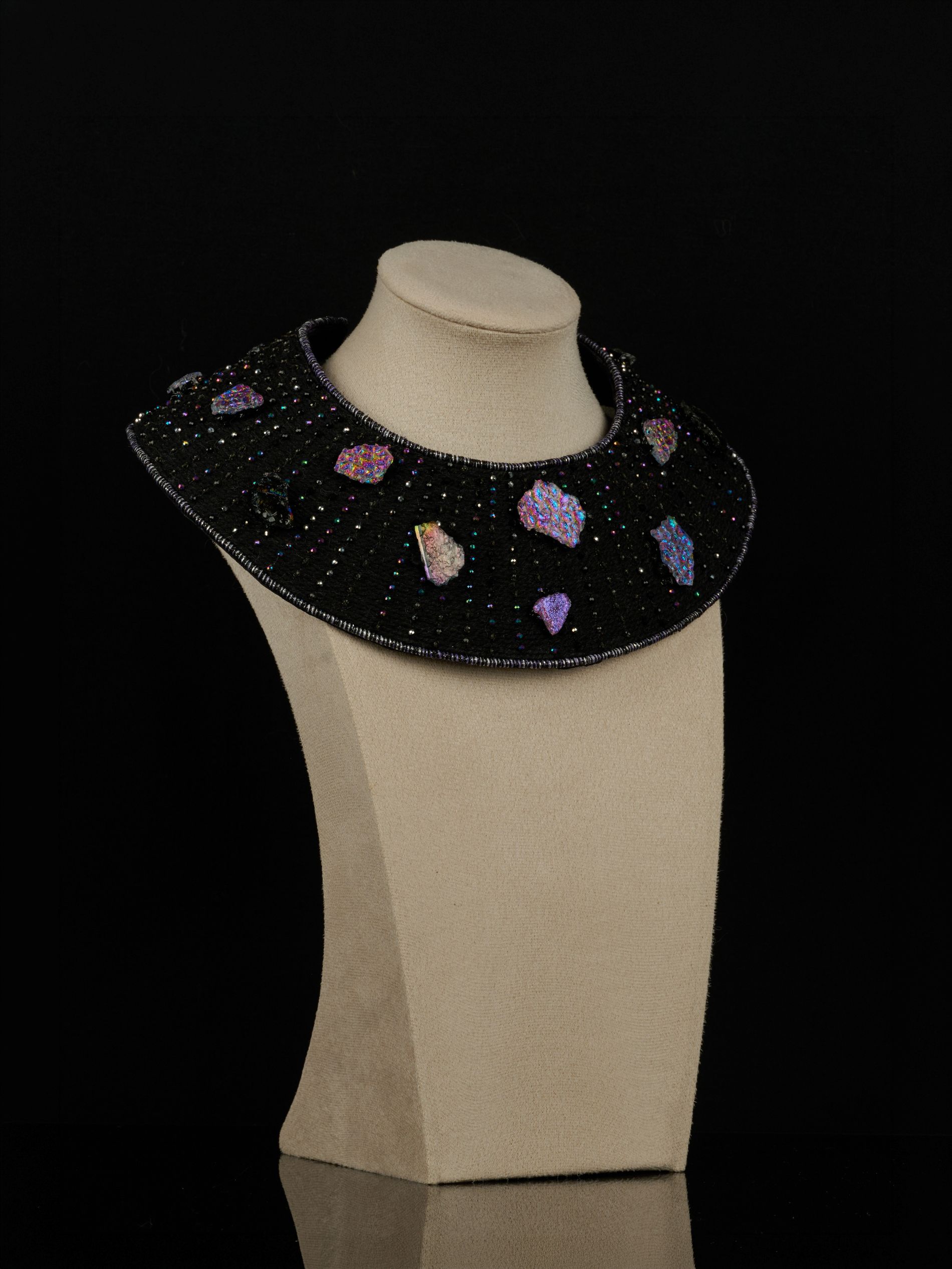
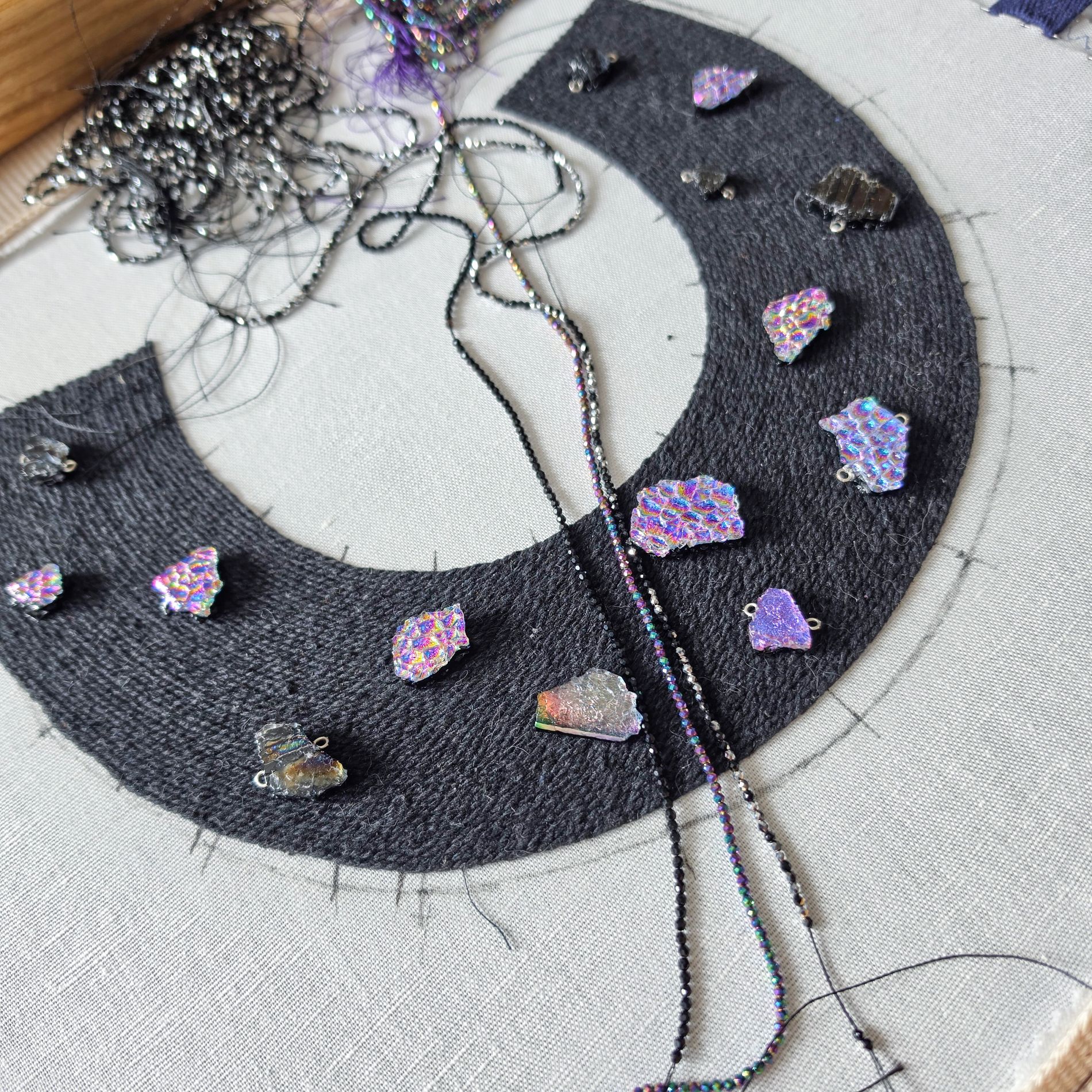
The second piece became much bolder, taking its colours from contemporary images of the Moon rather than the Moon as we normally imagine it. For me, that transformation became one of the most interesting parts of the whole collaboration.
NAOMI JACQUES: GLASS PROCESS
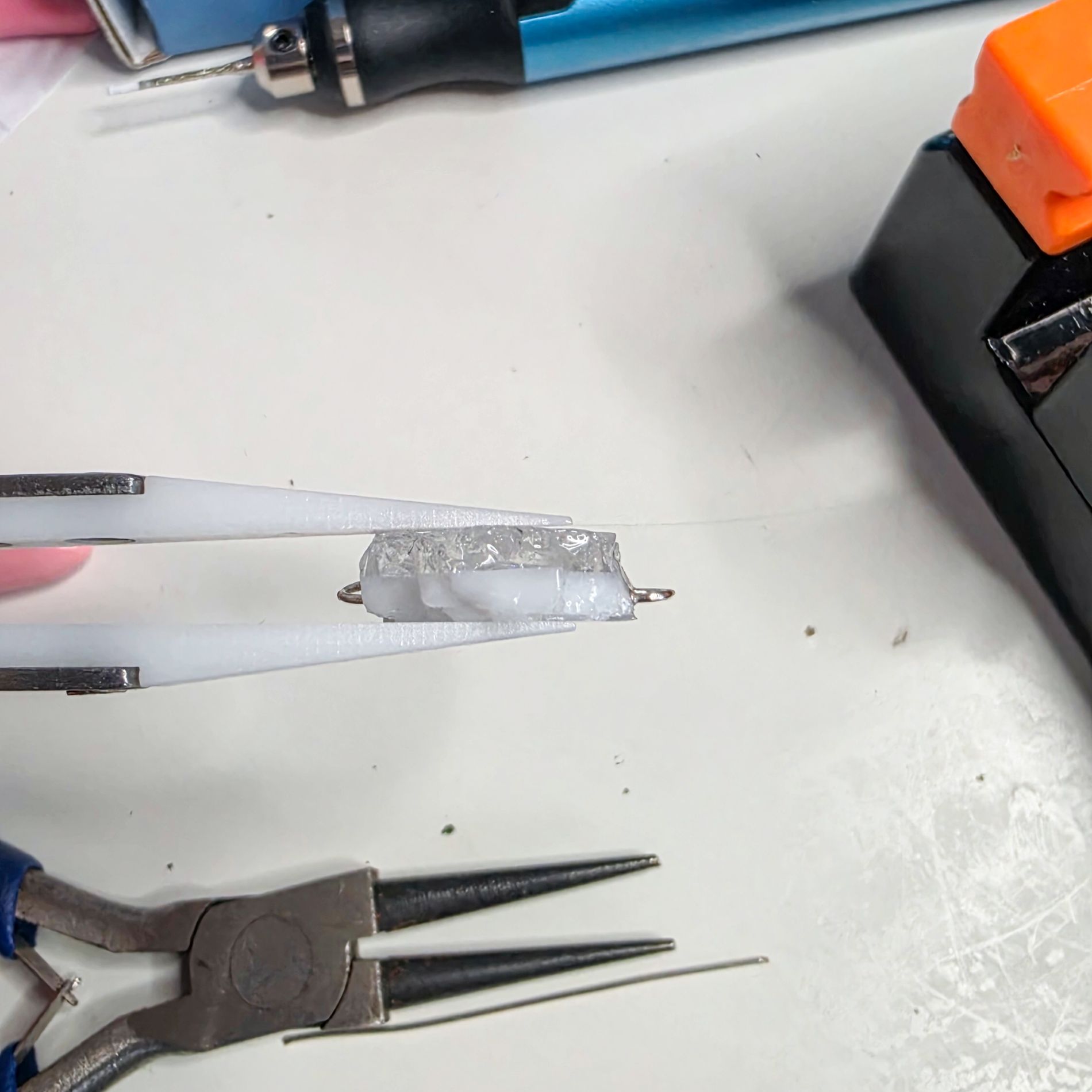
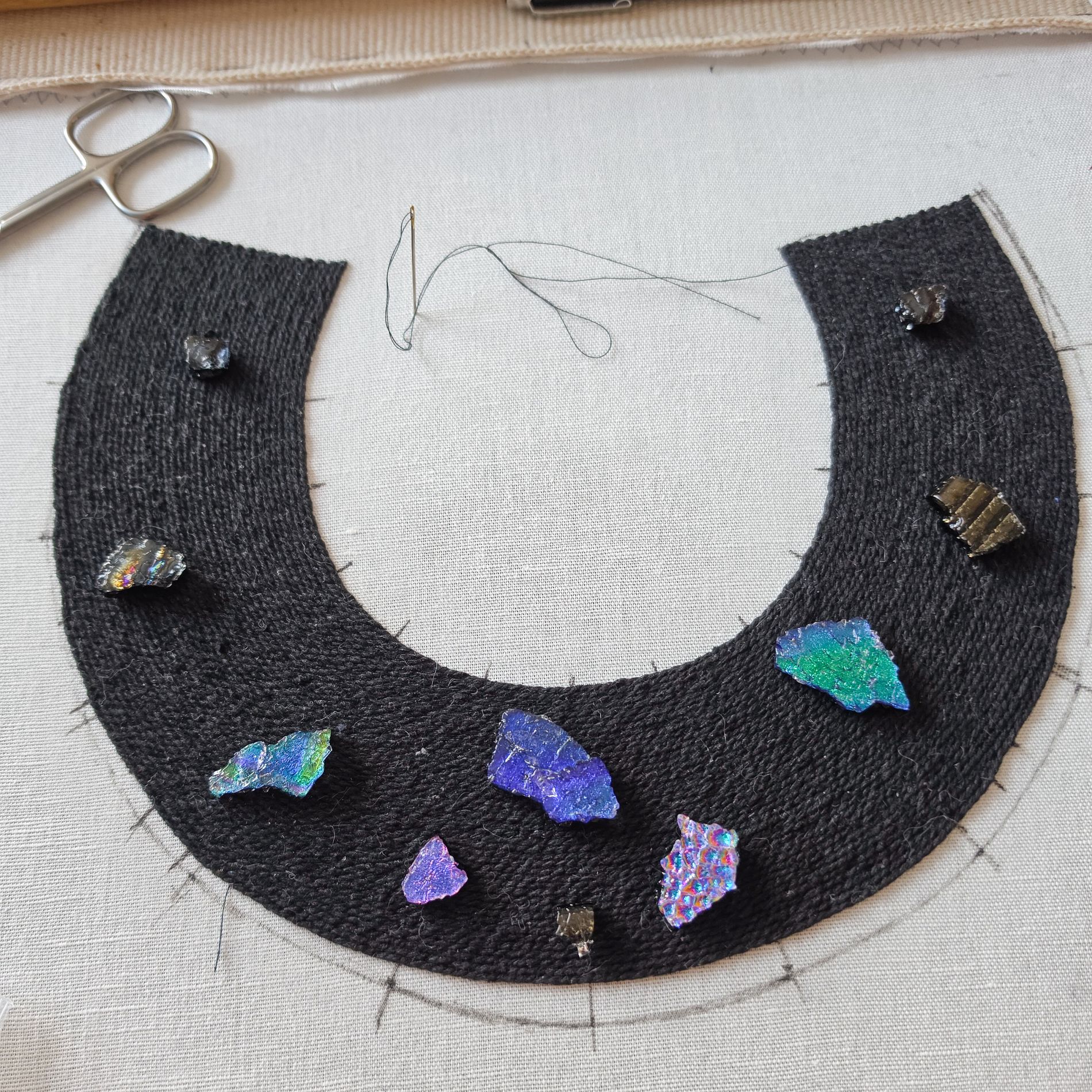
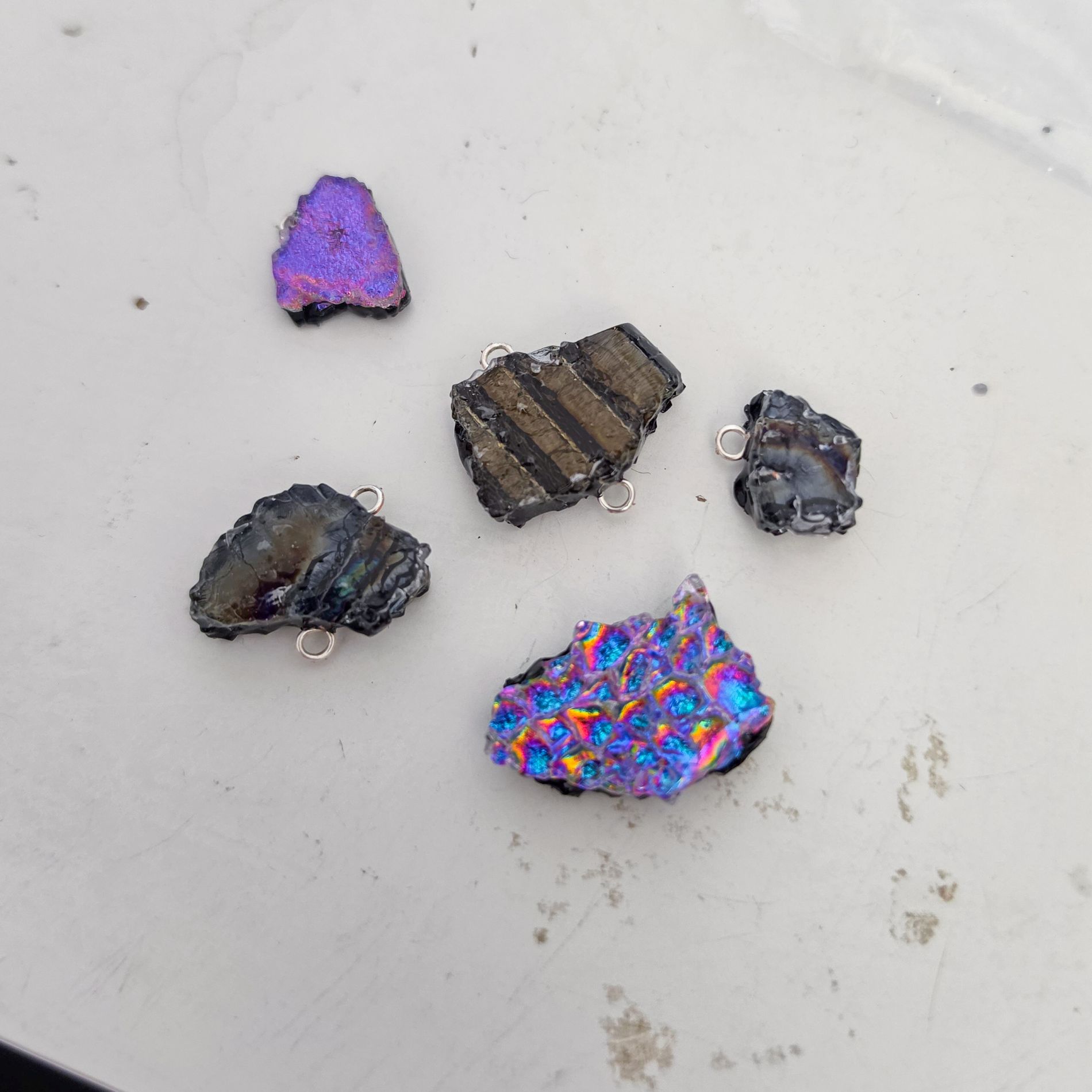
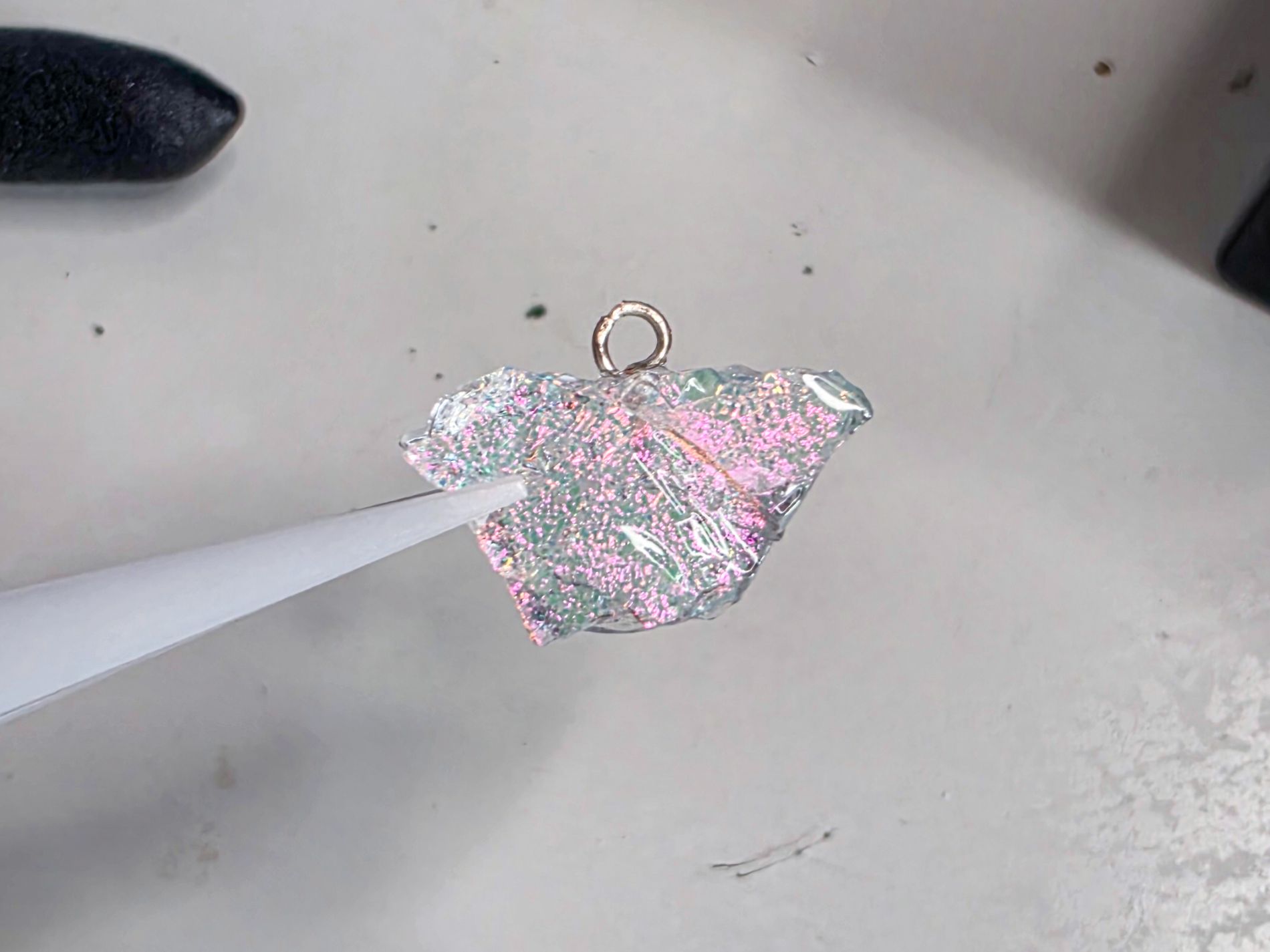
Each glass nugget is fired three times. The first firing builds thickness over a dichroic base. The second uses heat followed by thermal shock in cold water, deliberately fracturing the glass so Naomi can form the individual nuggets. A third firing then fuses and anneals each piece, making it stable enough to use in the necklaces. Because of this process, no two elements are identical. Dichroic glass adds another level of unpredictability: its colour can look completely different after firing.
Naomi’s process depends equally on technical knowledge, experimentation and an understanding of how glass reacts under heat.
KSENIA SEMIROVA: PEARL SETTING
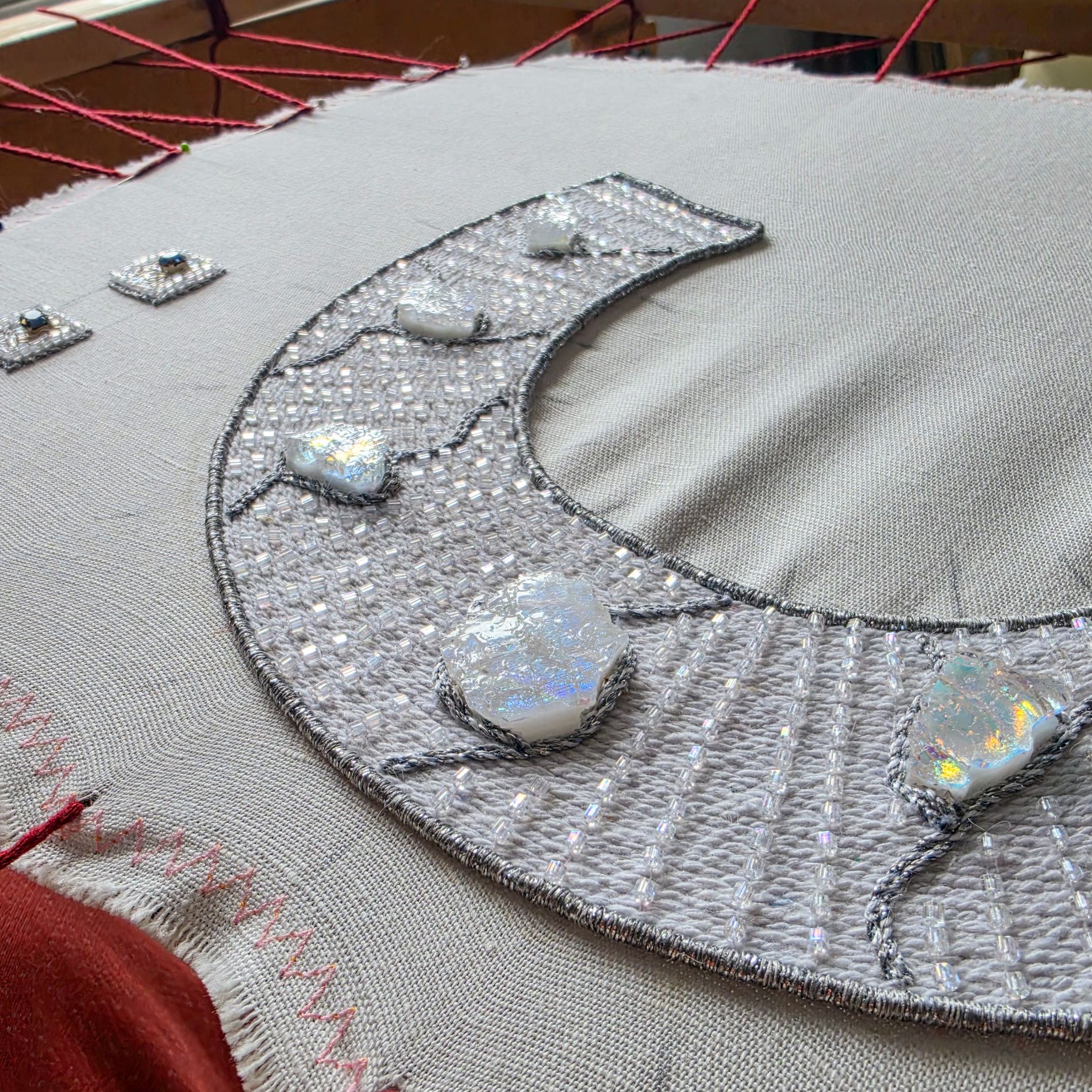
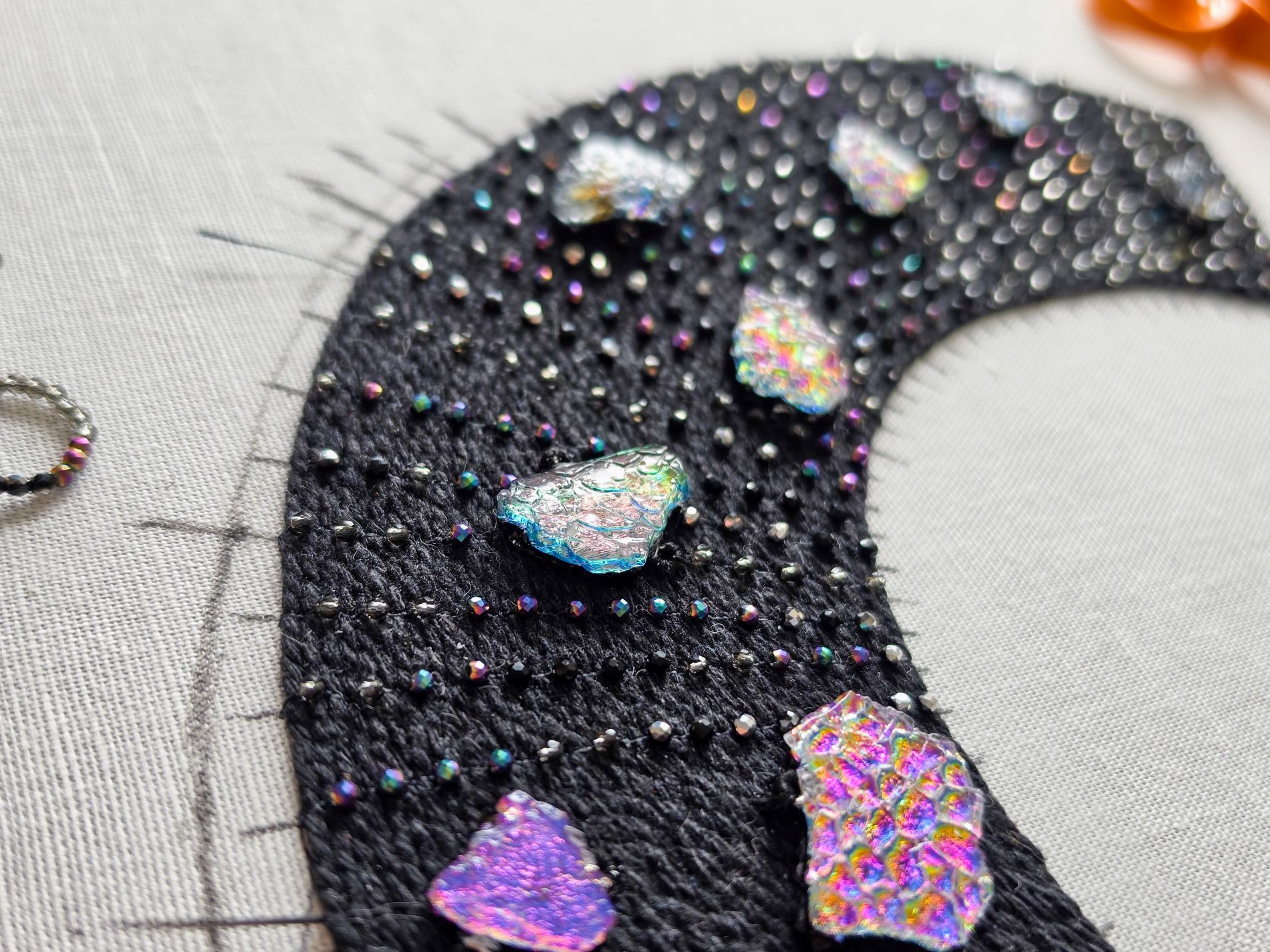
The embroidery and construction were inspired by the zaboroshnik, a horseshoe-shaped women’s neck ornament historically worn in the Arkhangelsk region of the Russian North. Traditional examples were made on a firm base using Pearl Setting — a heritage embroidery technique in which raised cords form a foundation for pearls, mother-of-pearl and beads.
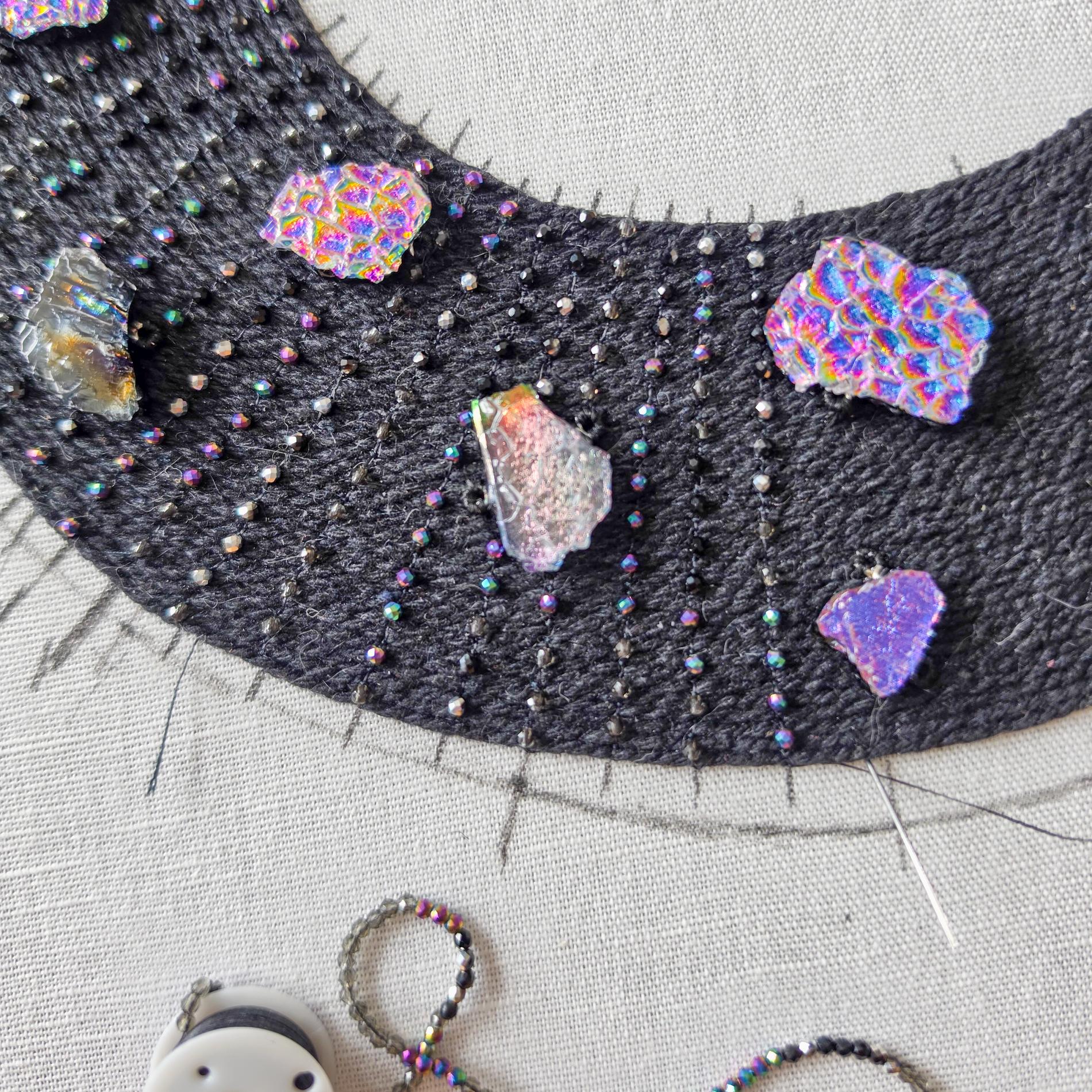
For this project, Ksenia adapted the same principle, replacing traditional inserts with Naomi’s handmade glass nuggets and developing the surrounding surface with beads and decorative cords. The horseshoe-shaped structure remains close to the historical reference, but pearls and mother-of-pearl are replaced by dichroic glass, dark beads and contemporary colour.
From Lunar Surface to Colour
The project began with the Artemis II mission and the renewed idea of travelling around the Moon. Lunar surface imagery became an important visual reference, particularly the detailed photographs that show its craters, textures and dramatic changes of light. Andrew McCarthy’s colour-enhanced images opened another direction. Instead of the familiar grey Moon, they reveal unexpected blues, purples, reds and warmer metallic tones linked to differences across the lunar surface. Those images became especially important for the second necklace, pushing the project away from the restrained white palette of the first piece towards something much more vivid, complex and almost unreal.
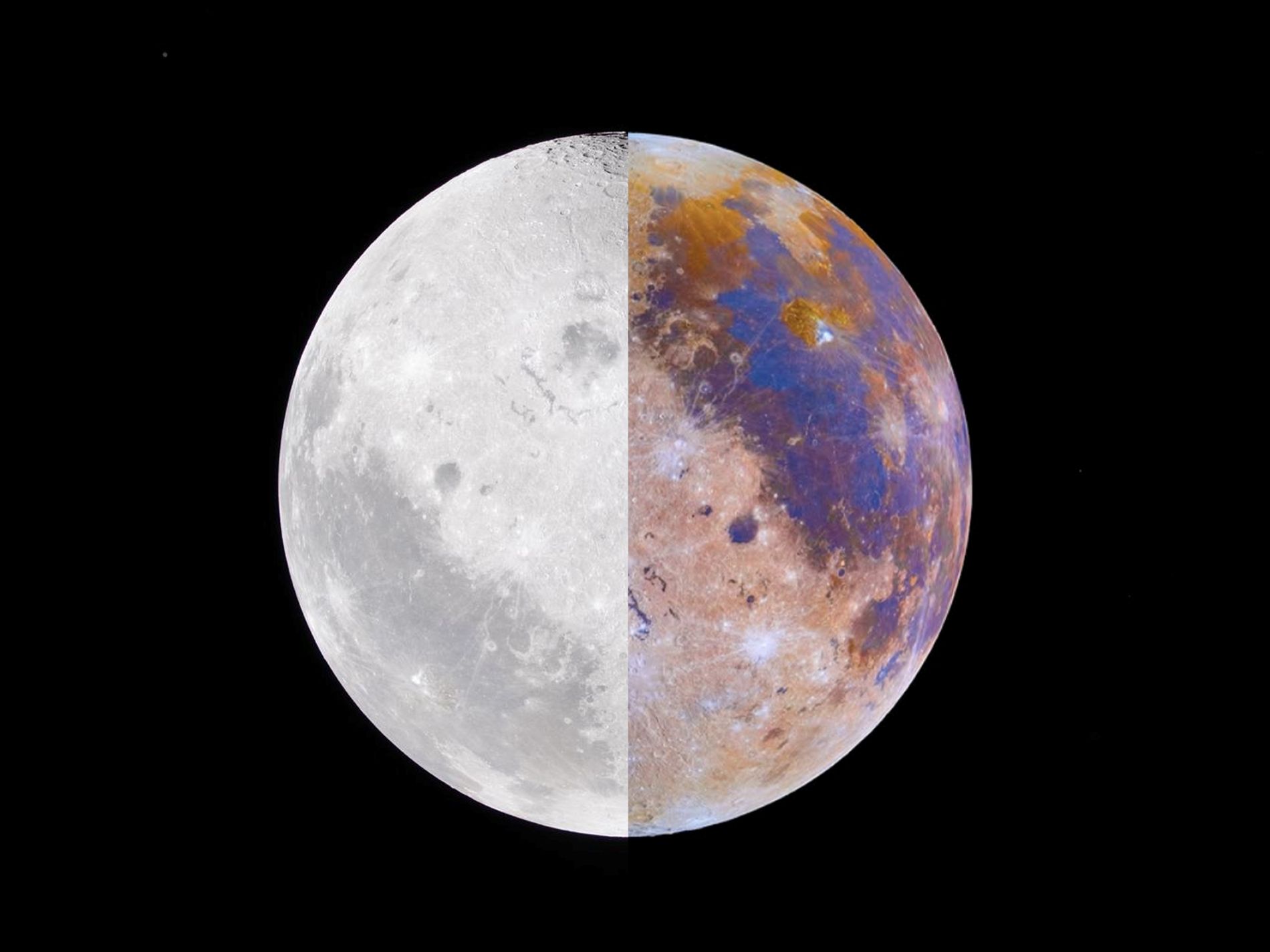
TWO VIEWS OF THE MOON
Collar Necklaces
The two necklaces use the same horseshoe-shaped structure and the same combination of pearl setting and handmade glass, but the results are deliberately different. The first stays close to the familiar image of the Moon: pale, cold and reflective. The second takes its direction from colour-enhanced lunar photography, with black embroidery and flashes of violet, blue, pink and metallic colour. Both can be worn, but their scale and dense surfaces also allow them to exist as complete objects away from the body.